
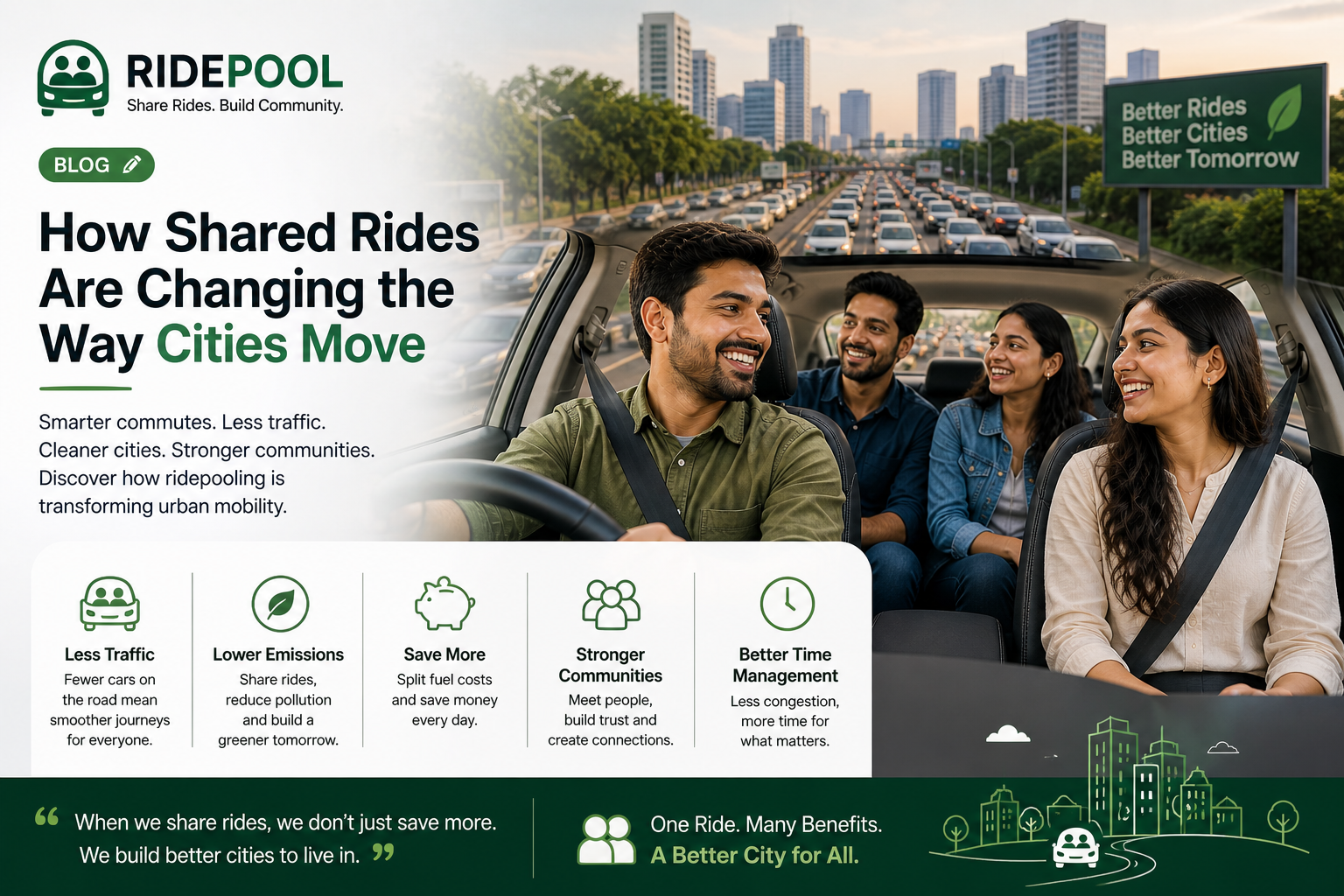

How Shared Rides Are Changing the Way Cities Move
Cities like Bangalore are growing faster than ever. More people, more jobs, more movement—and unfortunately, more traffic.
For most commuters, this means longer travel times, rising fuel costs, and daily frustration. But quietly, something is beginning to shift.
Shared rides are changing how cities move.
The Problem with Solo Commuting
For years, commuting has been built around one person per vehicle. It’s convenient—but incredibly inefficient.
- Too many cars on the road
- Too much fuel being used
- Too much time wasted in traffic
In a city already stretched for space, this model simply doesn’t scale anymore.
A Smarter Way to Use What We Already Have
Ridepooling doesn’t add more vehicles—it makes better use of the ones already on the road.
Instead of four cars carrying four people, you have one car carrying four people.
That small shift creates a ripple effect:
- Fewer vehicles on the road
- Less congestion at peak hours
- Faster, smoother commutes for everyone
It’s simple, but powerful.
Less Traffic, More Flow
When more people choose to share rides, traffic patterns begin to change.
Not overnight—but gradually.
- Roads feel less crowded
- Bottlenecks reduce over time
- Travel becomes more predictable
And while one shared ride may seem small, thousands of them across a city can transform how traffic behaves.
Sustainability Without Effort
Most people want to make environmentally conscious choices—but not at the cost of convenience.
That’s where ridepooling stands out.
You don’t have to change your route.
You don’t have to change your schedule.
You simply share the journey.
And by doing that, you:
- Reduce carbon emissions
- Lower fuel consumption
- Contribute to a cleaner city
All without extra effort.
The Human Side of Urban Mobility
Beyond efficiency and sustainability, shared rides bring something cities often lack—connection.
Instead of isolated commutes, people experience:
- Conversations instead of silence
- Familiar faces instead of strangers
- A sense of community in everyday travel
It turns movement into something more meaningful.
Why This Matters for the Future
As cities continue to grow, adding more roads or more cars isn’t a long-term solution.
Smarter mobility is.
Ridepooling represents a shift:
- From ownership to sharing
- From isolation to connection
- From congestion to collaboration
It’s not just about moving faster—it’s about moving better.
Final Thought
The future of cities won’t be built on more vehicles—it will be built on better systems.
And sometimes, the simplest idea—sharing a ride—can create the biggest change.
Because when we move together, cities move better too.